

Executive Summary
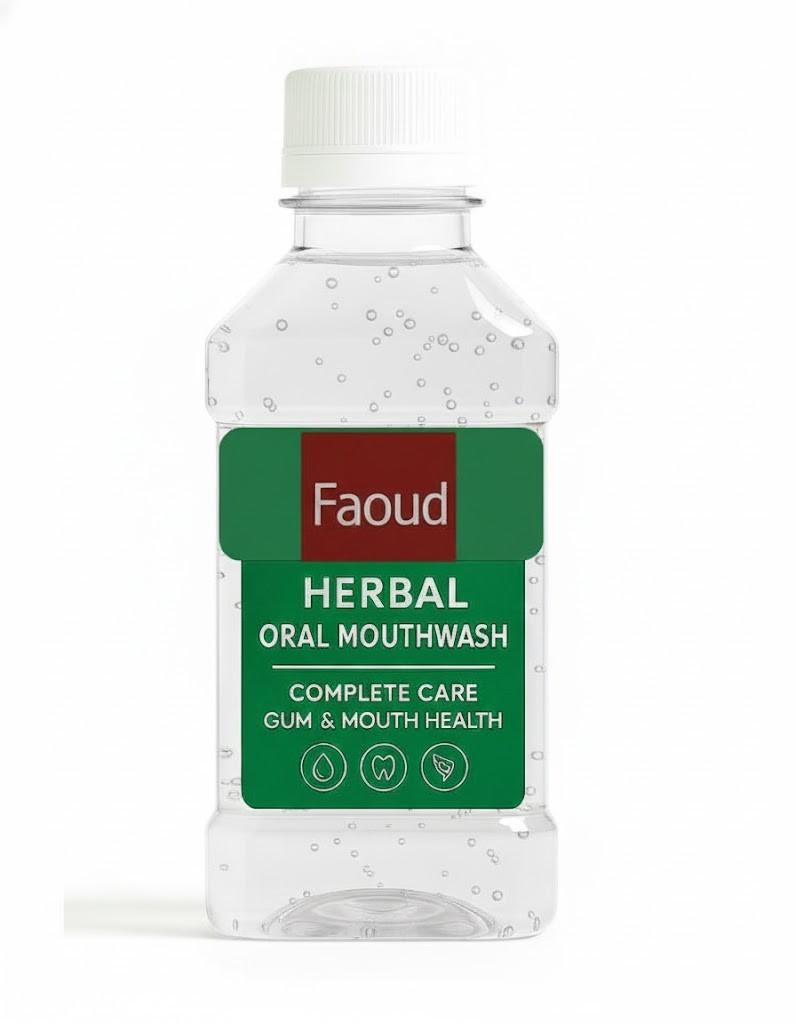
The oral hygiene market has long relied on alcohol-based mouthwashes, which, despite their efficacy, cause burning, dry mouth, and are unsuitable for many users. The FAOUD Ayurvedic Herbal Mouthwash successfully disrupted this segment by offering an alcohol-free, natural formulation powered by traditional ingredients (Lavanga, Triphala, Nimba). This product appeals to consumers seeking a gentle, effective, and holistic approach to oral care, delivering proven antibacterial and anti-inflammatory benefits without the harsh side effects of synthetic agents.
1. The Market Problem & Consumer Pain Points
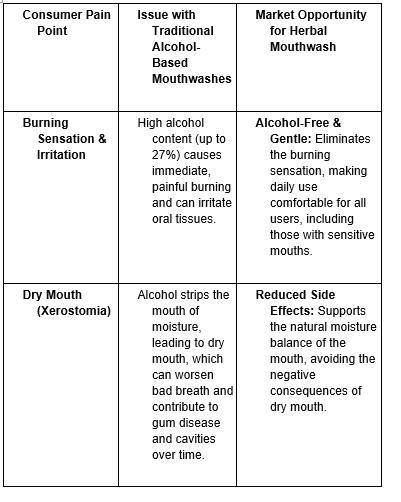
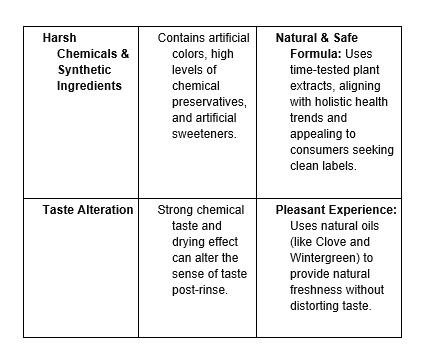
Consumers value freshness and germ control but often experience discomfort and negative side effects from conventional mouthwashes, creating a strong market need for a gentle alternative.
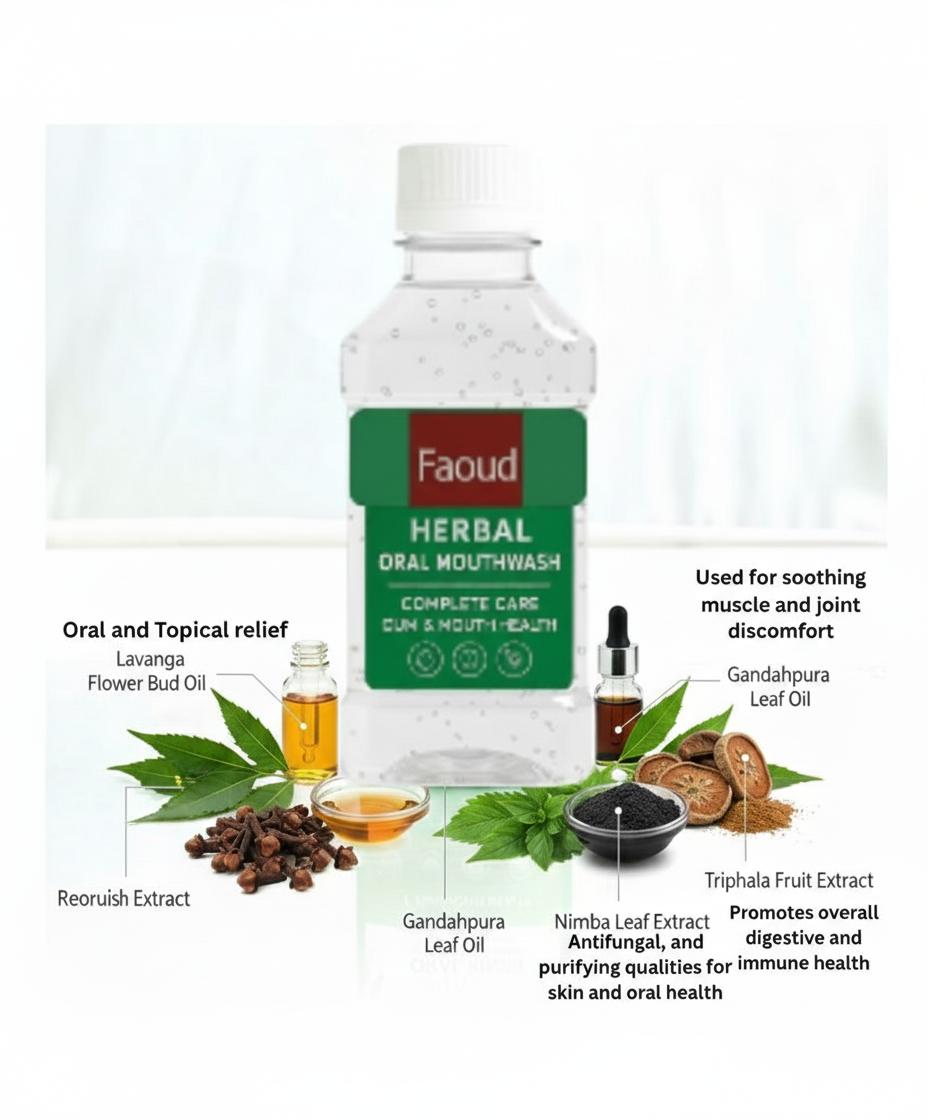
2. The Ayurvedic Solution: Proven Plant-Based Actives
The formulation strategically excludes alcohol and synthetic irritants, relying instead on a synergy of powerful, time-tested Ayurvedic herbs to deliver comprehensive oral hygiene benefits.
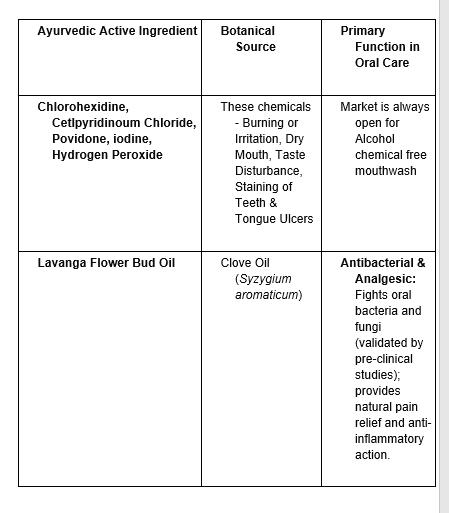
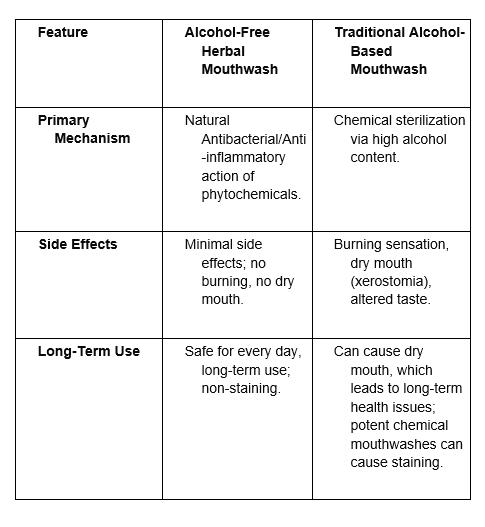
Comparative Advantage (Herbal vs. Traditional):
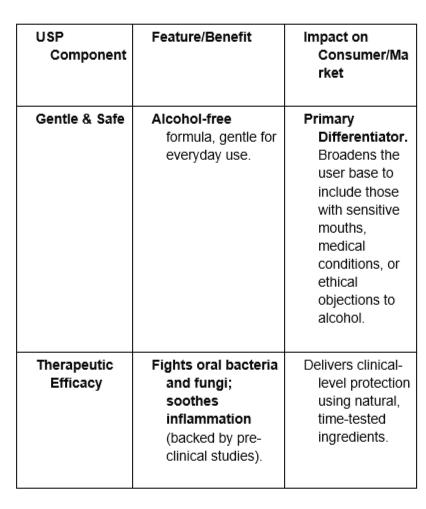
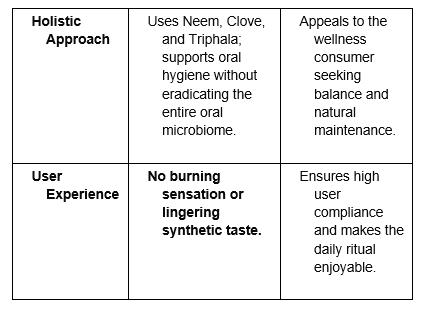
3. Unique Selling Proposition (USP) & Market Differentiation
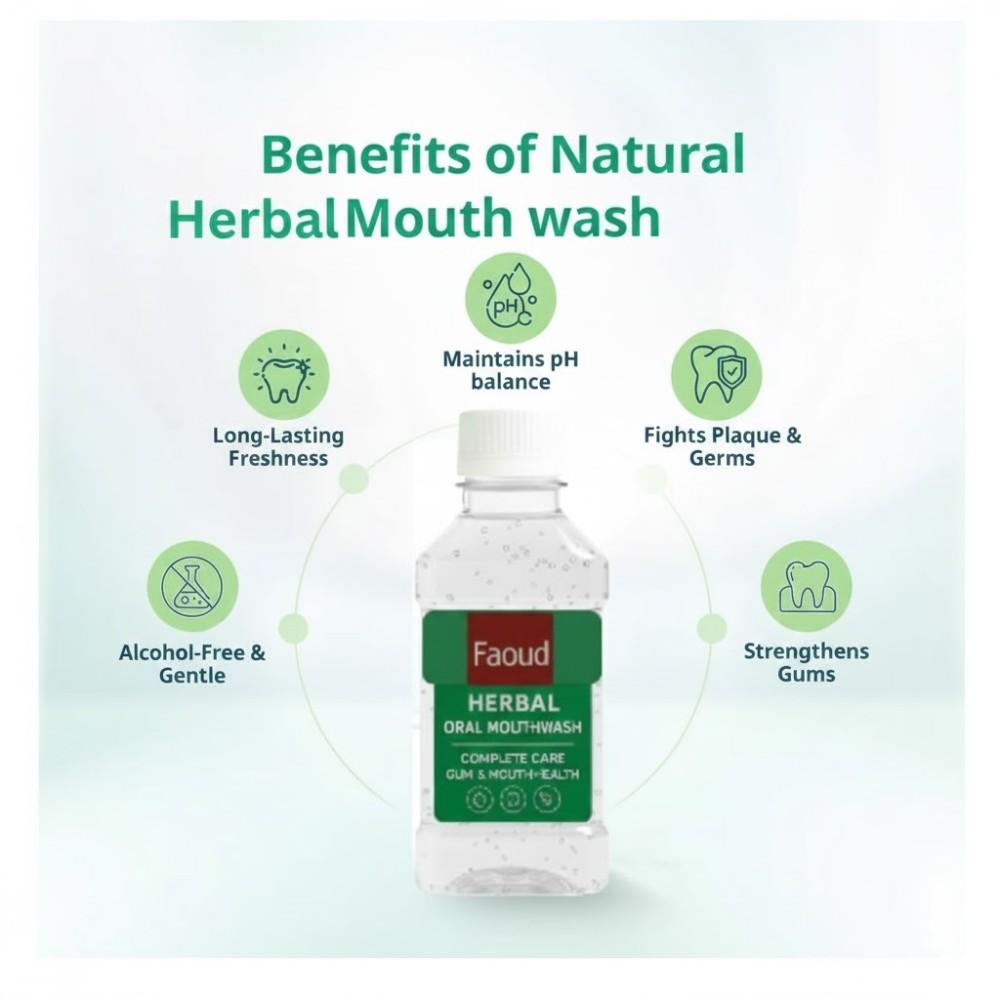
The herbal mouthwash successfully differentiates itself by focusing on user comfort, ingredient safety, and holistic health alignment:
4. Conclusion and Strategic Takeaways
The FAOUD Ayurvedic Herbal Mouthwash capitalized on the market fatigue toward harsh chemical products. By proving that effective oral hygiene—germ fighting, plaque reduction, and anti-inflammation—can be achieved using a natural, alcohol-free platform, the product appeals to a growing segment of health-conscious consumers. Its success hinges on transforming the daily ritual from a chemically aggressive necessity into a gentle, supportive act of holistic self-care.
Strategic Takeaway:
In the hygiene sector, replacing aggressive synthetics with proven, time-tested natural ingredients (like those in Ayurveda) is a powerful strategy for capturing the premium, wellness-driven consumer.